A Fresh Start Begins in the Kitchen
There’s something magical about a brand-new year. The calendar flips, the house quiets down after the holidays, and suddenly we crave calm, clarity, and a reset in every corner of life — especially in the kitchen. January is the perfect time to open those pantry doors, face the shelves we’ve ignored since October, and create a space that makes everyday cooking feel easier, lighter, and more intentional.
This post may contain affiliate links. If you click on one of our affiliate links and make a purchase, We may receive a commission at no additional cost to you. We only share products and recommendations we believe may be helpful to our readers.
A pantry reset isn’t just about making things look pretty (though that’s a bonus). It’s about saving money, reducing waste, and setting up simple systems that support your cooking habits year-round. Whether you have a large walk-in pantry or a single cabinet, you can transform it into a streamlined, stress-free space — one that makes meal planning, grocery shopping, and weeknight dinners feel effortless.
Let’s walk through this step-by-step so you can start the new year with a clean, organized pantry you’ll actually enjoy using.
Step 1: Completely Empty the Pantry (Yes… Everything!)
This is the most time-consuming part, but it’s absolutely worth it. Pull every item out and place it on your counter or table. Grouping similar items together as you unload — baking, snacks, pasta and grains, canned goods, sauces, breakfast foods — will make the process easier.
Once the pantry is empty:
✔ Wipe down shelves
✔ Vacuum corners
✔ Toss old shelf liners
✔ Clean up spills or crumbs
✔ Add fresh liners if desired
Think of this as giving your pantry a fresh, clean slate.
Step 2: Declutter Anything Expired, Stale, or Just… Not Working
Now’s the time to be honest with yourself. You do not have to carry old habits or half-used ingredients into the new year.
Go through each group and look for:
- Expired canned goods
- Stale snacks
- Opened bags of rice, pasta, or flour that have been sitting too long
- Spices that lost their flavor
- Duplicates taking up unnecessary space
- Ingredients from a recipe you made once and never revisited
If you haven’t used it in 6–12 months and it’s not a true staple, consider donating unopened items or discarding what’s no longer safe to eat.
This single step often clears 20–40% of pantry clutter — and instantly creates breathing room.
Step 3: Take Inventory Before Restocking
This is where your Our Hungry Home pantry, freezer, and fridge inventory printables come in handy.
Write down what you already have so you don’t buy duplicates, and take note of:
- What’s running low
- What you use most often
- What you tend to forget about
- Which items need better storage
- What you’d like to stock up on for winter
This inventory process helps your future meal planning, grocery shopping, and budgeting in a big way.
Transform Your Kitchen Into a Calm, Clutter-Free Space
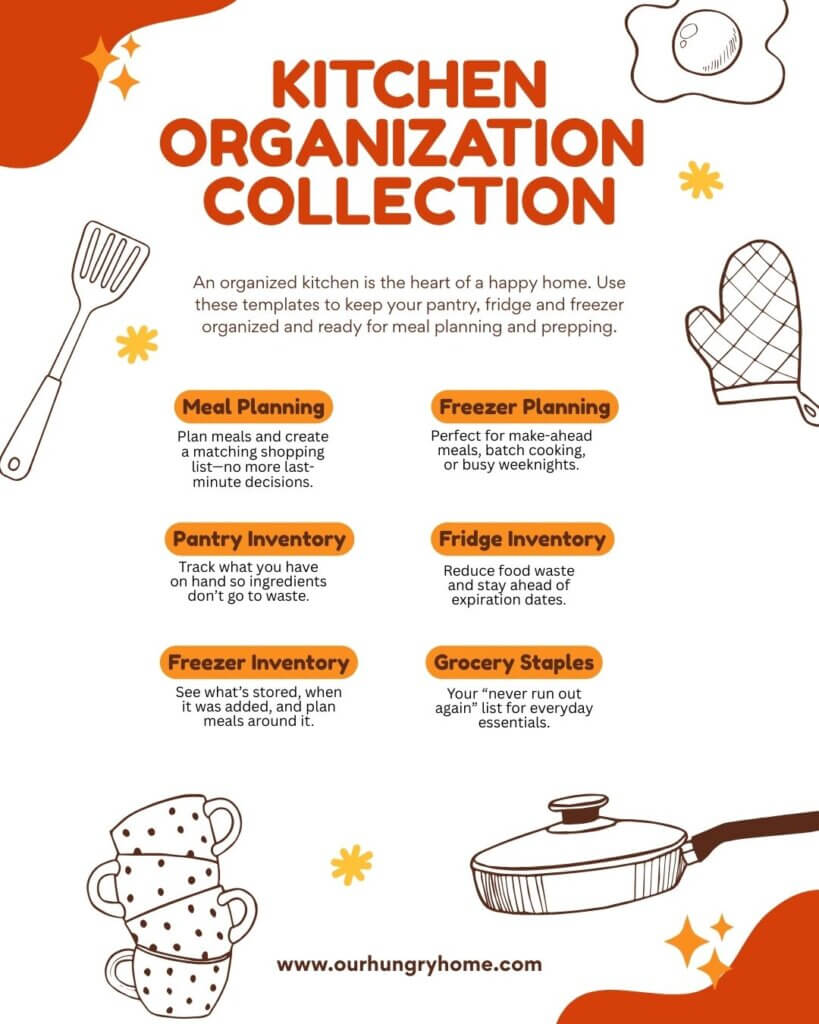
If your kitchen feels chaotic, crowded, or impossible to keep organized, the Kitchen Organization Collection is here to help. This set of six printable templates is designed to bring clarity, structure, and peace to the busiest room in your home. With simple layouts and easy-to-use formats, you can finally keep track of what you have, what you need, and what’s coming next.
From weekly meal planning to pantry inventory tracking, these printables work together to streamline your routines and eliminate the daily guesswork. Whether you’re feeding a family or cooking for one, this collection helps you stay on top of groceries, storage, and kitchen essentials—without stress.
Step 4: Organize by Zones (The Secret to Long-Term Success)
Creating zones is the heart of an organized pantry. Zones keep similar items together, make it easier to find things, and help everyone in your household know where things go.
Here are the zones I recommend:
Baking Zone
Flour, sugar, chocolate chips, cocoa, baking soda, extracts, nuts, muffin liners — keep all your baking essentials together so you’re always ready for cookies or banana bread.
Breakfast Zone
Cereal, oatmeal, pancake mix, granola bars, nut butters, syrup.
Snacks Zone
Chips, pretzels, fruit cups, crackers, popcorn.
Use baskets for grab-and-go options.
Canned Goods Zone
Beans, tomatoes, broths, vegetables, soups, sauces.
Sort by type or by frequency of use.
Pasta, Rice & Grains Zone
Keep these together for simple weeknight planning.
Spices & Seasonings Zone
Use risers, spice drawers, or turntables to keep everything visible.
Baking Oils, Vinegars & Sauces Zone
Perfect for marinades and quick dinner flavor.
Bulk Items Zone
Paper goods, extra olive oil, jars, or back-stock items.
Don’t worry if your pantry is small — zones can be created even with two shelves and a cabinet door.
Step 5: Choose Storage Solutions That Fit Your Space (Not Just Pinterest)
A beautifully organized pantry doesn’t require a huge budget. Use what you already have, then fill in gaps with inexpensive organizers.
Helpful pantry organizers:
- Clear bins for snacks or categories
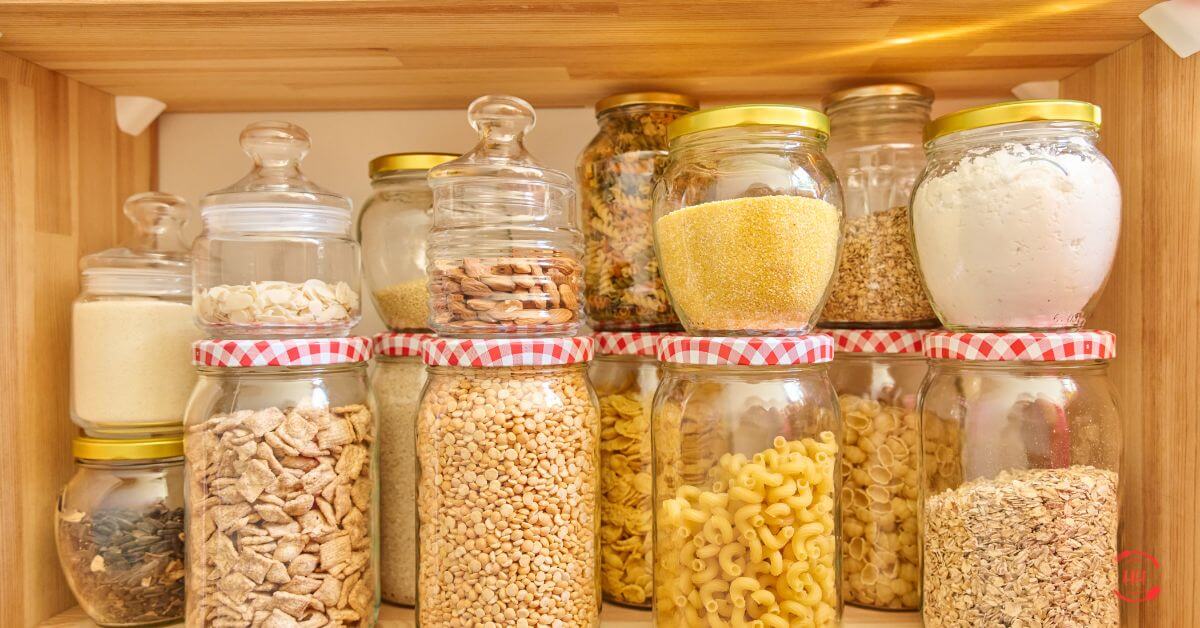
- OXO or airtight containers for flour, sugar, grains, and pasta
- Lazy Susans for oils, sauces, and nut butters
- Tiered risers for canned goods or spices
- Baskets for back-stock or small packets
- Labeled jars for baking ingredients
- Over-the-door shelves for extra space
If you have the space, designate one basket as a “Use First” bin for items near their expiration date — such a simple way to reduce waste.
Step 6: Label Everything
Labels help the whole household stay consistent. You can use:
- Pre-printed sticker labels
- Chalkboard labels
- Label maker tape
Label containers, baskets, shelves — anything that will help you maintain your system long-term.
Step 7: Restock with Smart Staples for Winter Cooking
Now for the fun part! January is a cozy cooking month, so stock your pantry with ingredients that support comfort foods, soups, quick dinners, and warm breakfasts.
Essential Pantry Staples to Keep on Hand in January
Grains & Starches
Rice, quinoa, pasta, couscous, oats, potatoes.
Canned Goods
Beans, tomatoes, broths, coconut milk, vegetables.
Winter Baking
Flour, sugar, cocoa powder, chocolate chips, yeast, spices.
Protein Basics
Canned chicken, tuna, salmon, dried beans, lentils.
Flavor Boosters
Soy sauce, Worcestershire, hot sauce, vinegars, oils, bouillon.
Quick Meals
Jarred pasta sauce, boxed soups, curry pastes, instant rice.
Snacks
Granola, crackers, nuts, dried fruit.
Restocking with intentional staples will make your January meal planning feel effortless.
Step 8: Build a Simple Pantry Maintenance Routine
The best organized pantry is the one you can keep organized.
Here are 3 small habits that make a big difference:
1. Weekly “Quick Reset” (5 minutes)
Move items back to their zone, toss empty boxes, rotate older items forward.
2. Monthly Inventory Check
Use your printables to track what’s running low.
3. Seasonal Deep Reset
Every 3–4 months, give shelves a once-over to prevent buildup.
These mini-maintenance habits keep your pantry functional all year long.
The Benefits of a January Pantry Reset
Once your pantry is decluttered, cleaned, and thoughtfully organized, you’ll notice immediate benefits:
- Faster meal planning
- Less food waste
- Fewer duplicate purchases
- Easier grocery shopping
- Cleaner shelves
- More enjoyable cooking
- A sense of calm every time you open the door
It’s one of the best ways to reset your kitchen — and your mindset — for the new year.
Transform Your Kitchen Into a Calm, Clutter-Free Space
If your kitchen feels chaotic, crowded, or impossible to keep organized, the Kitchen Organization Collection is here to help. This set of six printable templates is designed to bring clarity, structure, and peace to the busiest room in your home. With simple layouts and easy-to-use formats, you can finally keep track of what you have, what you need, and what’s coming next.
From weekly meal planning to pantry inventory tracking, these printables work together to streamline your routines and eliminate the daily guesswork. Whether you’re feeding a family or cooking for one, this collection helps you stay on top of groceries, storage, and kitchen essentials—without stress.