
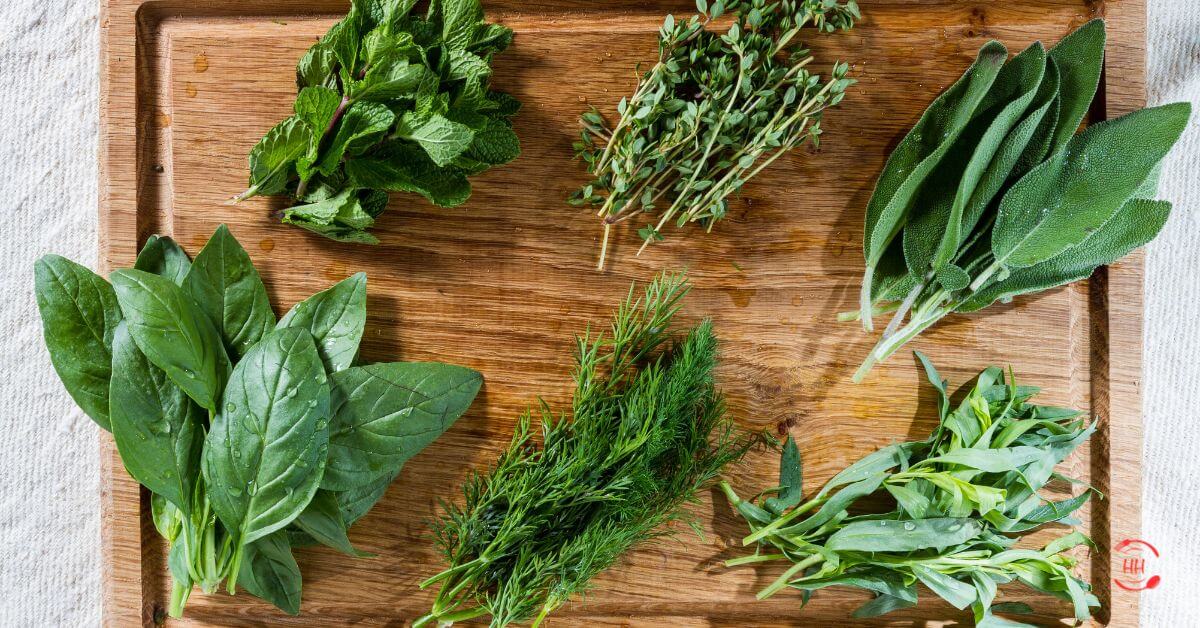
Introduction: Why Fresh Herbs Make Everything Better
There’s something about fresh herbs that instantly transforms a meal.
A sprinkle of chopped basil, a handful of fresh cilantro, or a touch of rosemary can take even the simplest dish from basic to beautiful. And during spring and summer, herbs are not only more affordable—they’re at their absolute peak in flavor.
If you’ve ever stood in your kitchen wondering “which herb goes with this?” or tossed wilted herbs from the fridge, this guide is for you.
Today, we’re breaking down:
- The most common fresh herbs (and when they’re in season)
- How to pair herbs with the right foods
- The best ways to store herbs so they last longer
- 5 simple recipes to start using them right away
This post may contain affiliate links. If you click on one of our affiliate links and make a purchase, We may receive a commission at no additional cost to you. We only share products and recommendations we believe may be helpful to our readers.
Fresh Herbs in Season (Spring & Summer)
These herbs are widely available year-round, but truly shine in warmer months:
- Basil – late spring through summer
- Cilantro – spring and early summer
- Parsley – spring through fall
- Dill – spring and summer
- Mint – late spring through summer
- Chives – spring and early summer
- Rosemary – year-round (but strongest in warmer months)
- Thyme – year-round, peak in summer
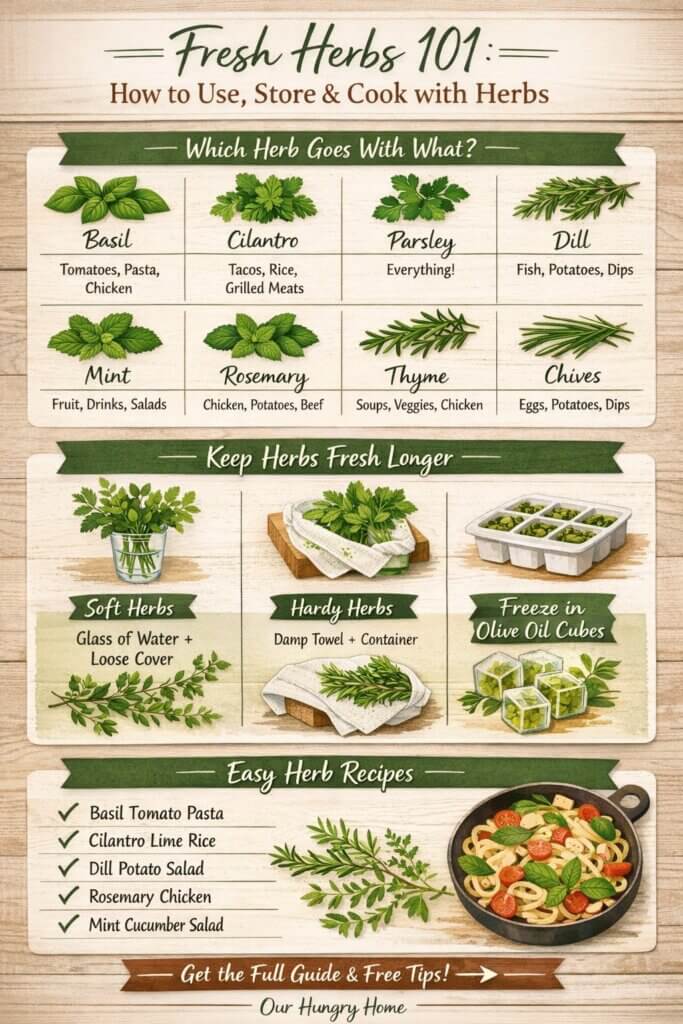
Download this FREE Fresh Herb Guide!
What Each Herb Tastes Like (and When to Use It)
Understanding flavor is the secret to using herbs confidently.
Basil
Flavor: Sweet, slightly peppery
Best with: Tomatoes, pasta, chicken, mozzarella
Think: Italian dishes, salads, fresh sauces
Cilantro
Flavor: Bright, citrusy
Best with: Tacos, rice, grilled meats, salsa
Perfect for: Mexican-inspired meals
Parsley
Flavor: Clean, fresh, slightly peppery
Best with: Everything (seriously!)
Use as a finishing herb to brighten any dish
Dill
Flavor: Light, tangy, slightly sweet
Best with: Fish, potatoes, yogurt sauces
Great in: summer sides and dips
Mint
Flavor: Cool, refreshing
Best with: Fruit, drinks, salads, lamb
Adds a fresh twist to both sweet and savory
Rosemary
Flavor: Bold, earthy, pine-like
Best with: Roasted meats, potatoes, bread
Use sparingly—very strong!
Thyme
Flavor: Subtle, earthy
Best with: Chicken, soups, roasted vegetables
A great “all-purpose” savory herb
Chives
Flavor: Mild onion
Best with: Eggs, potatoes, dips
Perfect finishing touch
How to Know Which Herb to Use
A simple rule of thumb:
- Light dishes → light herbs (dill, parsley, chives)
- Rich dishes → stronger herbs (rosemary, thyme)
- Fresh/summer meals → bright herbs (basil, cilantro, mint)
And when in doubt?
Start small—you can always add more.
How to Store Fresh Herbs (So They Last Longer)
This is where most people go wrong—but it’s easy to fix!
Shop This Post (Kitchen Favorites I Love)
Herb Savor Keeper – These are so cool! They will keep your herbs fresh for up to 3 weeks!
Herb Chopper
Herb Wall Chart with pictures that doubles as art!
Soft Herbs (Basil, Cilantro, Parsley, Mint)
Treat them like flowers:
- Trim the stems
- Place in a glass of water
- Cover loosely with a plastic bag
- Store in the fridge (except basil—keep on the counter!)
Lasts up to a week or more
Hardy Herbs (Rosemary, Thyme)
- Wrap in a damp paper towel
- Place in a sealed container or bag
- Store in the fridge
Lasts 1–2 weeks
Download this FREE Fresh Herb Guide!
Bonus Tip: Freeze Them!
- Chop herbs
- Add to ice cube trays
- Cover with olive oil
- Freeze for easy cooking cubes
Perfect for soups, sauces, and quick meals!
Check out this Blog Post…20 Creative Ways to Use Ice Trays in the Kitchen
You’ll never use ice trays for ICE again!
Looking for more cooking inspiration?
This post pairs perfectly with these complementary posts:
Everyday Spices Guide
Flavor Pairings
Spring & Summer Produce Series
Combine any or all of these to create endless easy meal ideas for your family and friends.